01
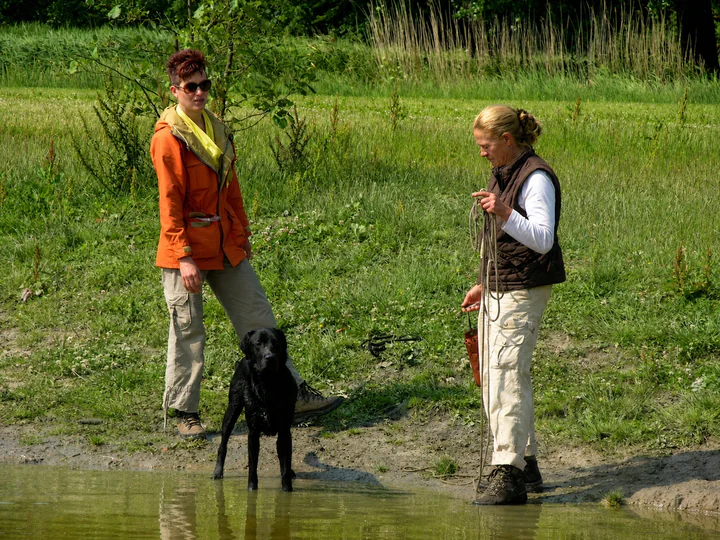
Observe before directing
We consider body language, recovery, triggers, motivation, health and habits, so we do not merely suppress a visible symptom.
Residential training & behavioural support · minimum 14 days
Wondering whether residential support suits your dog and your goals? We first discuss your wishes and what we can offer safely and responsibly, with no obligation. Our assessment is advice, not a commitment: you decide whether to book the paid programme. Only after your explicit choice and our confirmation does the first residential stage of at least fourteen days begin. It combines home-style care, observation, reward-based practice, exercise, enjoyment and recovery. You receive our findings and practical guidance for home; results vary and are not guaranteed.
No standard programme
A residential programme creates time to observe behaviour in different situations and practise new responses calmly. Each dog’s welfare, pace of learning and safety shape the plan.
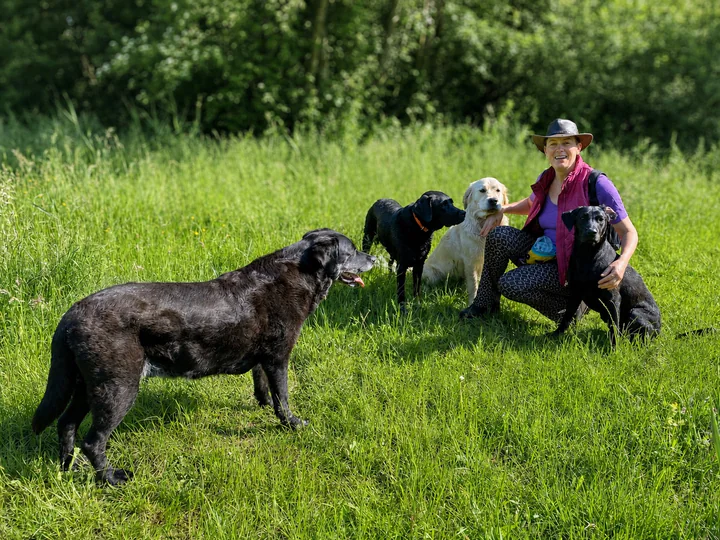
The support is about more than rest and practice. Depending on the dog, we also include exercise, sniffing, water play, suitable social contact and enjoyable moments of success. Not every dog wants or is able to play in a group; social contact is always tailored to temperament, body language and safety.
We consider body language, recovery, triggers, motivation, health and habits, so we do not merely suppress a visible symptom.
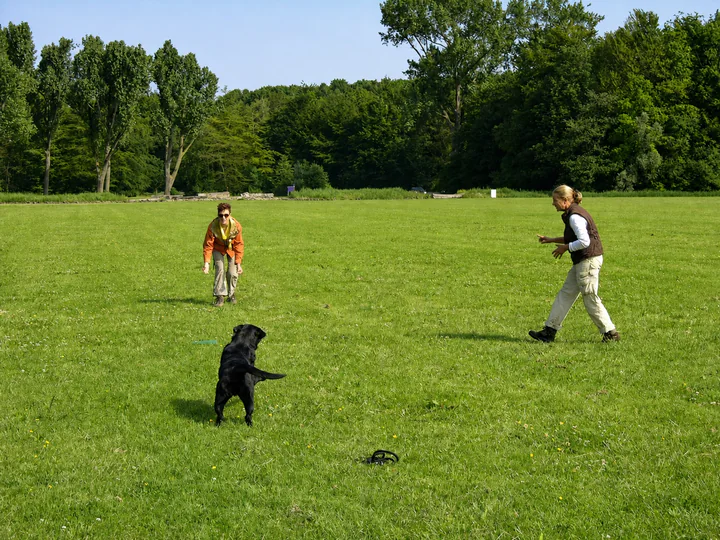
Short sessions are woven into walks, rest, care, waiting and safe social situations, making learning part of everyday life.
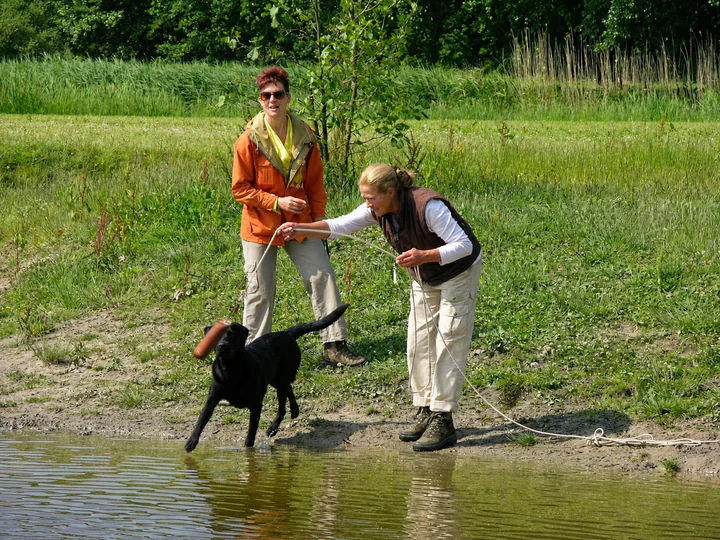
We make learning clear, achievable and motivating, using rewards that suit the individual dog. Small successes and the enjoyment of working together are the foundation; we do not use coercive tools.
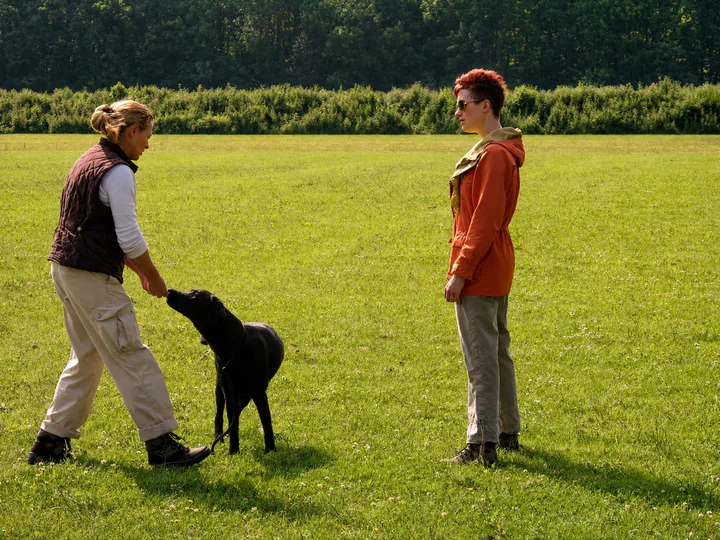
Dogs do not automatically transfer learning to home or another person. A coached handover, home plan and follow-up are therefore integral.
From concern to continuation
Fourteen days is the minimum first stage, not a fixed deadline for behaviour change.
You provide routines, health information, previous training, videos and every relevant incident, including lunging or biting. We decide whether residential placement is responsible.
The opening period focuses on adjustment, rest and careful observation. We do not force performance when stress or fatigue interferes with learning.
We select a small number of concrete goals suited to the dog, the concern and what can later be continued at home.
Short sessions alternate with movement, sleep and protected downtime. Progress is recorded and the plan adjusted where needed.
At collection, we practise together. You receive the same cues, agreements and management steps, a written home plan and at least one follow-up.
Extra Care / Intensive Care service level — not a customer rating.
Home-style stay · intensive support
The fee combines at least fourteen days of home-style daycare and overnight boarding with reserved Extra Care & Behavioural Support time. It is not a stand-alone training hour or standard package, but an intensive stay in which care, rest, observation and practice work together.
This support may suit house training, incontinence, emotional regulation, learning to relax independently or maintaining group calm. Residential support combines observation, targeted exercises, real-life situations and sufficient recovery time.
Extra Care & Behavioural Support can be booked in advance as a paid service. If we think additional support may be helpful during a regular stay, we discuss it with you first. Paid time slots are added to the app only after your prior, explicit approval. Results vary by dog and are not guaranteed.
Suitable and responsible
The concern, health, history and safety determine how we structure the residential stay. Complete information in advance helps us make a suitable plan and protects your dog, the other dogs and the carers.
Observation and behavioural support take place within our dog hotel. After the first two weeks, we report our findings, visible progress, points for attention and practical next steps directly to the client. The programme is not medical treatment and no outcome is guaranteed.
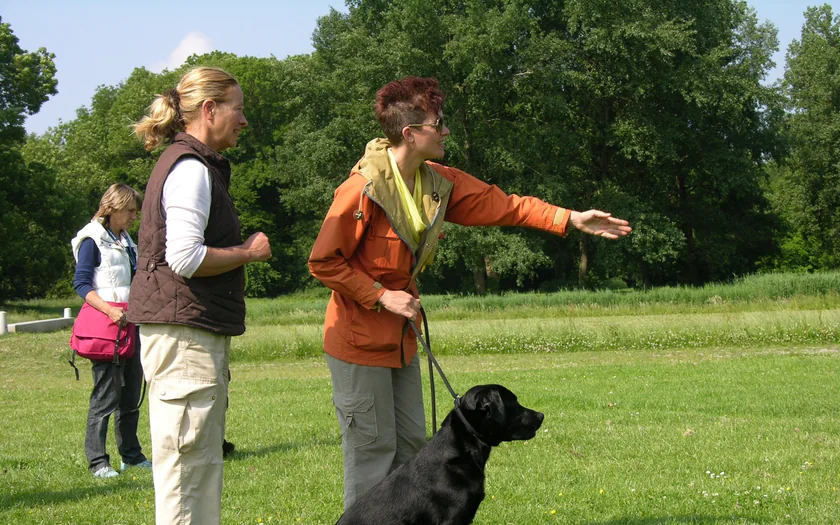
The next stage starts at collection
During the coached handover, we demonstrate the cues, rewards, distances and rest periods that help. The home plan explains what to continue, what to prevent for now and when to contact us. At least one follow-up reviews how behaviour transfers to the dog’s own environment.
FAQ
Clear expectations before a residential stay begins.
Ask a question firstYour dog stays at our dog hotel for at least fourteen days. After intake, we combine rest, observation and daily reward-based exercises around agreed goals. It is the first stage of a programme continued at home.
No. Fourteen days is the minimum first stage and allows time for observation and a start on new behaviour. Age, health, learning pace, history and complexity determine what is realistic and whether more support is needed.
No. We give no outcome guarantee. Behaviour depends on emotion, health, environment, learning history and the way the plan continues at home. We report honestly what we observe and recommend.
Possible goals include engagement, calmer lead walking, waiting, settling, impulse control, everyday handling, crate or transport familiarity and recall foundations in a safe setting. Goals are always individual.
We use reward-based methods and adapt motivation, distance, difficulty and rest to the dog. We do not use shock, prong or choke collars, pain, startle, intimidation or other coercion.
Yes. Dogs do not automatically apply learning at home or with another person. The coached handover, written home plan and at least one follow-up are fixed parts of the programme.
Applications require complete and honest disclosure of every incident. We assess in advance whether placement can be structured safely and responsibly; acceptance is never automatic. After the first two weeks, we report our observations, progress and points for attention directly to the client.
Sudden behaviour changes, pain signals, medication and relevant health information must be shared in full before the start. We record our observations and report them to the client. Our behavioural support is not a medical diagnosis or treatment.
Not automatically. We assess in advance whether a residential stay can be structured safely and responsibly. If accepted, we use a suitable rest area, individual support, small steps and ample recovery; if we cannot provide this safely, we do not confirm the placement.
The programme includes at least 14 days of day and overnight care with reserved Extra Care & Behavioural Support. The current underlying rates are visible as soon as the account is created. Our assessment determines which care components are suitable, whether a place is available and from which start date; that selection forms your personal quotation. Only our confirmation turns the request into a booking and fixes the amount agreed at confirmation. Any later paid change takes place only under arrangements shown in advance and expressly accepted.
For a dog needing help with house training, incontinence, emotional regulation, learning to relax independently or maintaining calm within the group. It includes extra toileting and walking moments, supervision and hygienic care, a tailored individual rest or sleeping area, a personal plan, reward-based guidance and clear boundaries. Results vary by dog. We discuss the appropriate care level and rate before confirming the booking. If a structurally different level proves necessary during the stay, we contact you as soon as possible; any surcharge applies only under rate arrangements shown and accepted in advance. Only our confirmation turns the request into a booking and fixes the amount agreed at confirmation. Any later paid change takes place only under arrangements shown in advance and expressly accepted.
For dogs at increased risk of bolting or wandering off, we can use additional GPS/satellite tracking when necessary and agreed. This is solely a safety measure and is not a training or correction device.
Yes, when this suits the individual dog. We combine learning and recovery with exercise, sniffing, outdoor time and suitable social contact. Some dogs enjoy playing together; others feel more comfortable walking together or enjoying quiet company. Safety and mutual comfort always determine how this is arranged.
No. An initial conversation and our assessment are non-binding advice and commit you to nothing. You remain in control and decide whether to book the paid programme. The first residential stage of at least fourteen days starts only after your explicit choice and our confirmation. We do not guarantee a particular outcome.
Explore without obligation
Feel free to share what you see at home, together with relevant information about health, routines and previous training. We consider what we can offer safely and responsibly and give you non-binding advice. You then decide whether to book the paid residential programme. The first stage of at least fourteen days starts only after your explicit choice and our confirmation.